Call for urgent garage-door service in Jacksonville
Opener and control troubleshooting
Garage Door Opener Repair in Jacksonville, FL
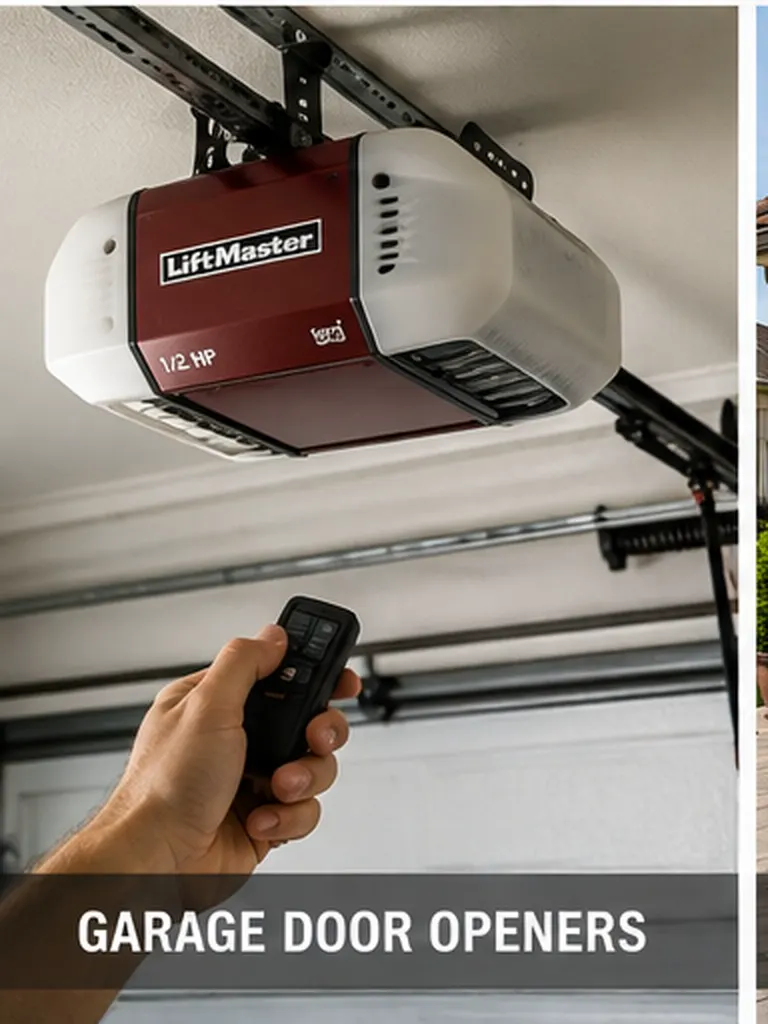
Troubleshooting for Jacksonville openers that click, hum, reverse, stop halfway, or work only sometimes, with the mechanical door checked alongside controls and sensors. The service page explains the likely failure, related hardware, and the safest next step for the door.
A complete door-system check keeps the repair connected to the symptom.
Start with what you notice
Signs this opener repair may be the right place to begin
A symptom can involve more than one part. These common patterns help you describe the problem without needing to diagnose it yourself.
The opener runs but the door does not move
The remote or wall control stops responding
The door reverses, stops, or loses its travel position
The opener is noisy, intermittent, or no longer closes the door
Safety note: Garage doors are heavy, and springs and cables can store significant energy. Do not wind springs, pull loose cables, or repeatedly cycle an unstable door.
When the opener runs but the door does not move
An opener is only one part of a garage door system. If the motor hums or the light comes on but the door does not travel, the trolley, drive component, emergency-release connection, springs, cables, or other mechanical parts may be involved. A disconnected trolley can look like a motor failure, while a broken spring can leave the opener unable to lift the door safely.
We start with the symptom and look at the door movement as well as the opener. That keeps a repair from focusing on the electronics while a mechanical problem continues to place load on the drive system. The door should move correctly by itself before the opener is expected to carry it through a full cycle.
Remotes, wall controls, and safety sensors
Remote problems can involve a depleted battery, programming, interference, receiver behavior, or a control board. Wall controls can have their own wiring or switch issues. Safety sensors are positioned near the floor and need a clear line between them; a misaligned or obstructed sensor can keep the door from closing or cause it to reverse.
A sensor symptom should be considered alongside the door’s actual movement. If the door binds, catches, or changes speed, the opener may be responding to mechanical resistance rather than failing on its own. We help separate control issues from problems with springs, rollers, tracks, hinges, or cables.
Travel limits, drive types, and intermittent operation
Travel limits tell the opener where the door should stop. A change in limits can show up as a door that stops short, travels too far, or reverses after reaching the floor. Chain-drive, belt-drive, and screw-style systems can also develop different noises or wear patterns in their rails, sprockets, belts, gears, and other drive components.
Intermittent operation deserves attention because an opener can appear normal several times before a worn component or connection creates another failure. We consider the pattern: whether the wall control works, whether the remote works, what happens when the door reaches the floor, and whether the mechanical door feels balanced. Smart or Wi-Fi features can be part of the conversation, but connectivity does not replace a physical safety check.
Repair or replacement for an opener
Repair can make sense when the opener has a focused, serviceable issue and the existing system remains a good match for the door. Replacement may be worth considering when the unit has repeated failures, significant drive or board damage, outdated safety behavior, or is not well matched to the door’s weight and use.
We do not assume a manufacturer credential or affiliation. The recommendation is based on the condition of the opener, the door, the controls, and the safety functions. If a new opener is considered, compatibility with the current door, rail arrangement, mounting, and accessories should be evaluated as part of the installation.
The final choice also depends on how the garage is used. A door used several times a day may need a different conversation from a detached garage that cycles less often. Noise, vibration, ceiling clearance, lighting, remote access, and the condition of the existing wiring or mounting can all help determine whether a focused opener repair or a replacement system is the better fit.
What belongs in the evaluation
The part you see may be connected to another part
The right service stays focused while still checking the hardware that shares the work of lifting, guiding, and securing the door.
Opener motor, rail, chain, belt, gear, or screw-drive behavior
Remote, wall-control, receiver, and safety-sensor response
Door balance, spring assistance, cables, rollers, and tracks
Travel limits, stopping points, and reversing behavior
Related garage-door help
Follow the system where the symptoms lead
These related services address connected problems that can appear alongside this request.
These answers focus on opener repair questions that usually come before a service request. They explain what the symptom can mean without turning high-tension garage-door work into a do-it-yourself project.
A click with no door movement can involve the wall control, receiver, trolley, emergency-release connection, drive, motor, spring, cable, or a door that is binding. Note whether the light or motor responds and whether the door itself feels balanced before choosing an opener repair path.
Why does my garage door reverse before it reaches the floor?
Reversing can be tied to sensor alignment, an obstruction, travel limits, the bottom seal, or mechanical resistance at the end of the travel. A clear sensor path is useful to note, but repeated reversal also warrants checking the door’s tracks, rollers, balance, and opener.
Can a smart or Wi-Fi opener still have a mechanical problem?
Yes. App connectivity, a remote, or a wall control only sends a command. The motor, rail, trolley, sensors, limits, springs, cables, rollers, and tracks still have to move the door. Compare the control response with the physical movement when describing the issue.
When should an opener be replaced instead of repaired?
Replacement may be worth comparing after repeated failures, significant drive or board damage, outdated safety behavior, or poor compatibility with the door. A focused repair can make more sense when the opener remains a good match and the fault is limited.
Jacksonville-area service
Garage Door Opener Repair requests in nearby communities
Garage Door Repair Jacksonville Florida serves Jacksonville and nearby Northeast Florida communities. These location pages add local background about homes, climate, and the systems common in each area.